A new release.
As in the manner of Tramps. I, the word ‘release’ (evoking images of a caged animal) is here somewhat inappropriate – but it is that another fragment of the Tramps. cycle is transiently wavering into availability for those intrepid enough to drop an email request; there will be some forthcoming attempt to present this fact to the world as, bearing a due degree of nausea, we probe the moral quagmire that is the fight for human attention.
This an introduction to the Tramps of Amenroad volumes, comprised of Eaxlewold Winter (the first chapter of volume II) and Consumption (writings and artworks as become apparent in volume IV).
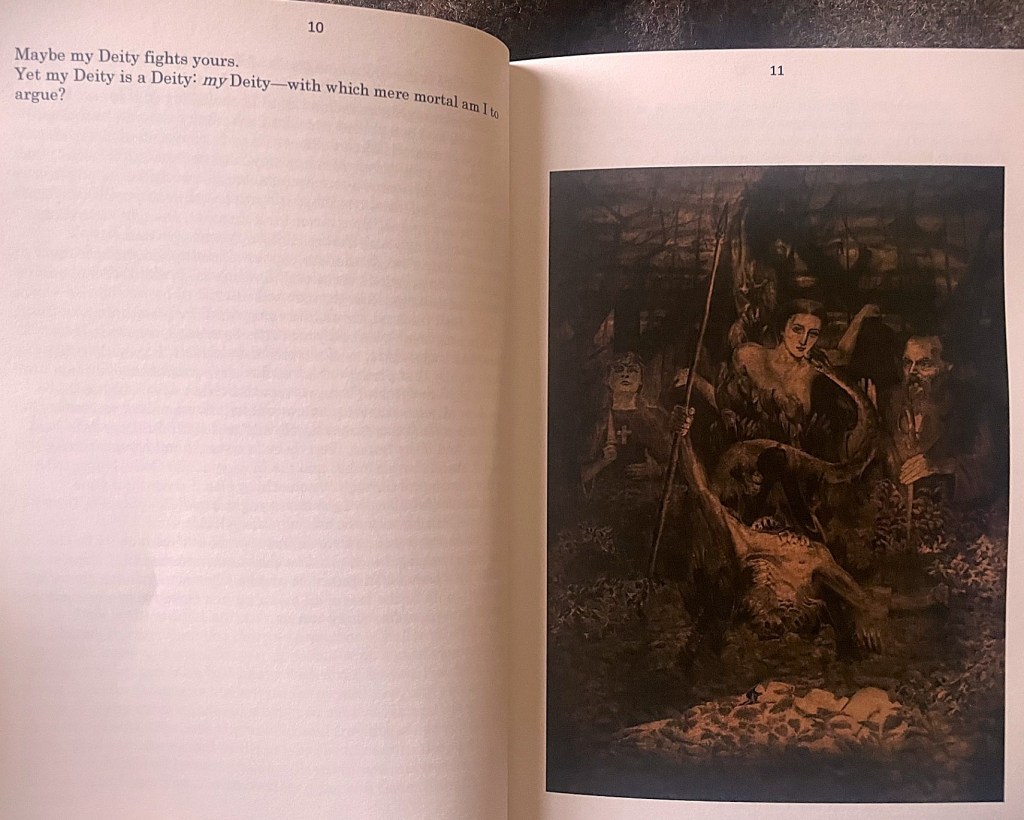
Eaxlewold Winter is an early nineteenth century account of three souls departing the civilised world:
- Michael (Joy) Munro, after finding intolerable the agitation remaining in the vicinity of his crimes.
- Blake, whose understanding of himself as an Ossian knight will not permit him being outdone.
- Specs, whose endeavour for truth necessitates testing his own bodily insignificance.
And, while each of these statements is true, they are true as one might cut an apple, and say it is but a circle of pale flesh; but one could also cut and find seeds or stalk, or a magot writhing in its decapitation. And in the case of this trio, one might say the more representative story as that, through morose contemplation or yearning for redemption or through the intoxication of strife and liqueur, that they entered that flickering twixt vulnerability and invulnerability, that indistinctness of self that permits merging with the beasts of old, that allowed them to see the Old Wood, and were left with something that would ever be restless until its call be answered.
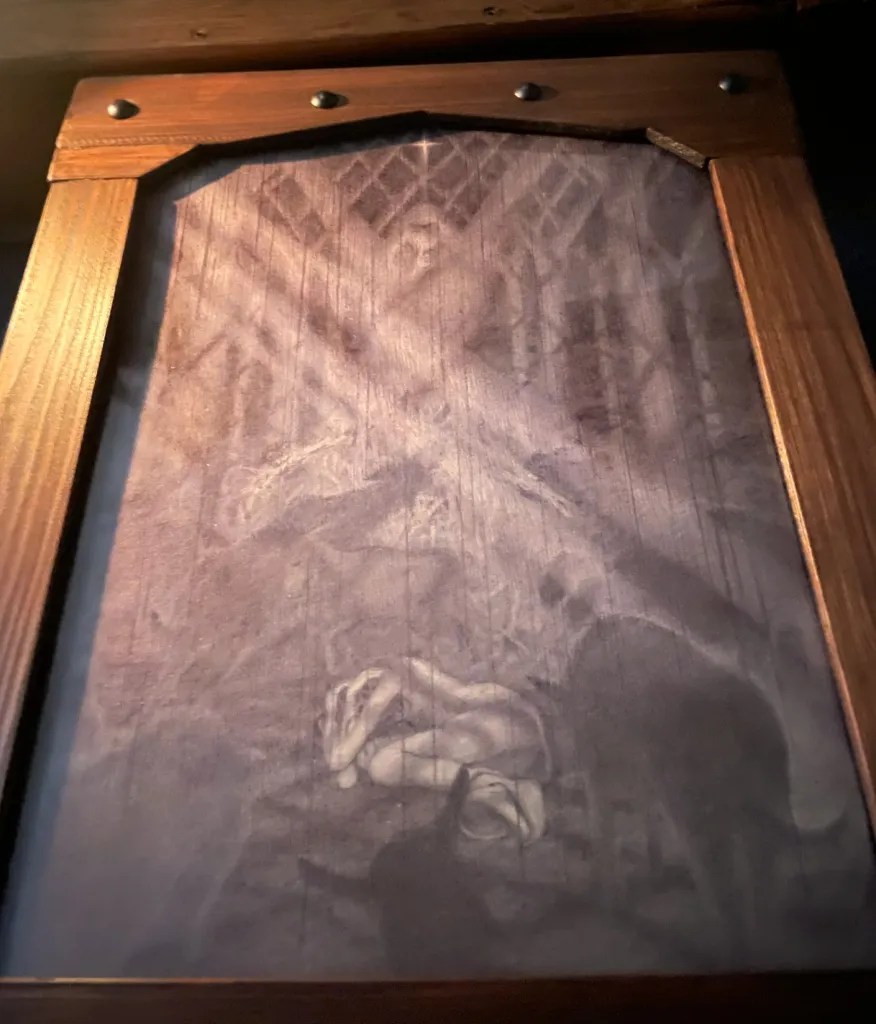
Consumption was a work penned by folk of Hares’ Hallow (one of scant hamlets along the road through the Eaxlewold and greater woodlands). This work illustrates certain pivotal points where life’s events allow the manifestation of the seven currents with relative purity. The account begins with a young lady’s acknowledgement of her contraction of consumption (now better known as Tuberculosis), and so too the understanding, whether it shall take one year or two, the disease shall curtail her life. She is thus moved so close to the fraudulence of mortal life that she can see little else, she is left with disgust at the optimism that enabled life’s propagation and the materialism that distracts from the true human predicament. Her nihilism is next swept away by a spiritualised wrath pointed at the lover (and father of her child) from whom she seems to have contracted the disease. She learns that, not only has he died, but also understands that it was her that contracted the disease through her own family, that it was rather her negligence that had led to her lover’s death. She retreats back to the evidence of all mortals’ futility. Still numbed by the residue of rage, she confronts horror, understanding the insignificance of mortal agony, the fraudulence of all human emotion as mere scrambling to exist. Long enduring commitment to this endeavour, assuring herself that her own pains are void of significance, she sees oblivion as merciful release. Her story of overcoming horror fragments, the ‘reasoning’ for her conflict is understood as something born of an attitude of rage, rather than adamantine truth. The significance of mortal pain is acknowledged. She accepts a meeker path to finding an answer, accepts with gratitude, even a life of sorrow; seeing the mystery and absurdity in the emergence of life and love. Now she is also aware of the potential extremity of suffering, of the nebulous question of where, and to what extent horror occurs.
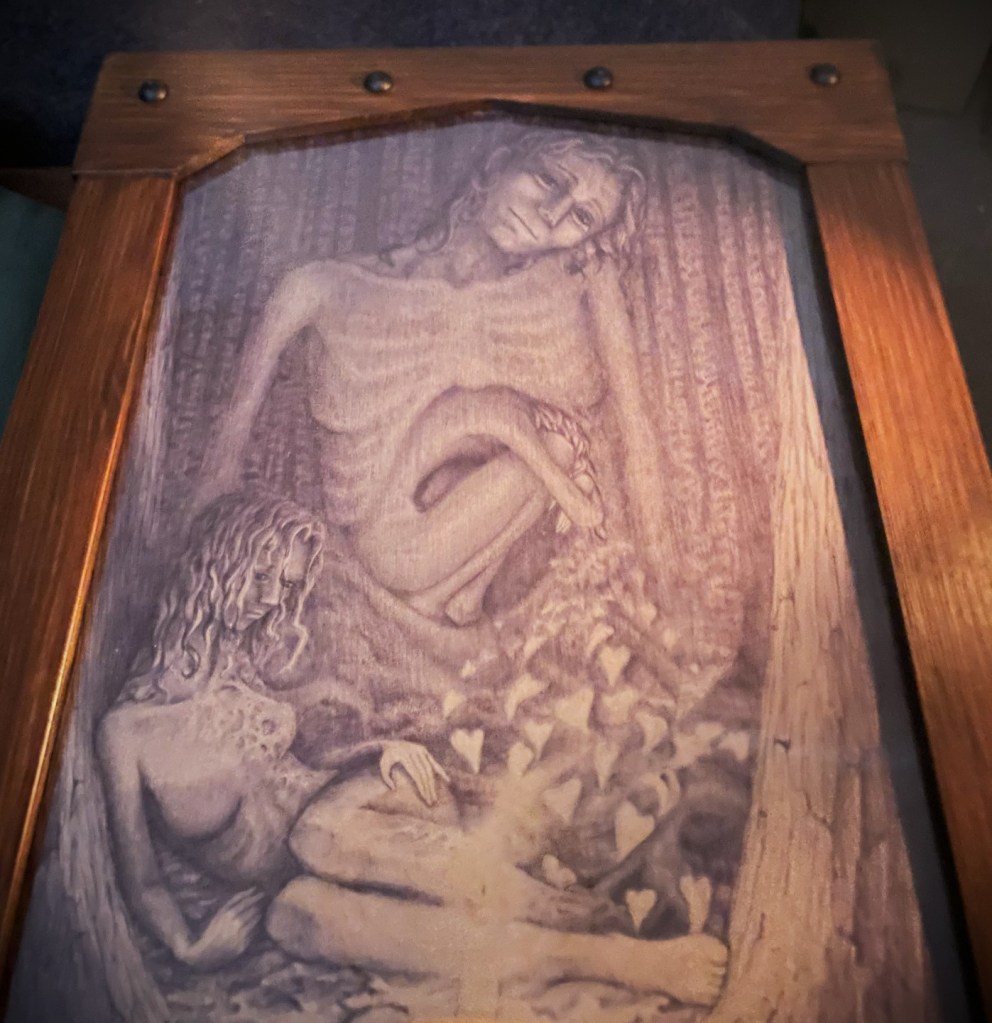
A new defiance is born, and with it an invulnerability to horror which that current brings, encouraged by the mysteries that she sees neglected. As with wrath at her lover, she finds a motivation unaffected by the knowledge of life’s transience; partly this is understanding that duty echoes in time, and her duty—to do her best for those in Hell, to do her best for her child. And—given that vengeance needs a face—in wrath at our callous creator. Even so, she understands herself now as a fragment of a force, something that is playing, is pretending to herself when she understands herself as powerful, as proud. Even the nourishment of this current cannot sustain forever; again, she encounters love and desire, and again the grief at her own state of decay, and inevitability of her child’s death. Finally, she accepts that each of these facets of being will wax and wane, that these stories of self are both pantomime and eternal truth: for each, at their apex, is impervious to the claim of insignificance that a more presumptuous reasoning might claim. It is imagined that the ‘real’ story, when we imagine a future eternal and hopeful, is something earthly events might only hint at. She understands the need to accept and destroy her links to the currents, clasping in one hand life’s primary duty to aid those in Hell, and in the other life’s dependence on and manipulation by the currents and the need to engage the mysteries to avoid stagnation or possession by a force neglected.
waronapathy@posteo.net


Leave a Reply